Scotland
The word crossed the water early and settled in the cities. In Glasgow and elsewhere a shebeen was an unlicensed drinking den — often in a tenement room, often run by someone with an Irish name — and the term is still understood there.
An unlicensed Irish drinking house — and the name of our pub.
síbínnoun an unlicensed drinking house; historically, in Ireland, a cottage kitchen or back room selling illicit poitín or home-brewed ale. Anglicised as shebeen. Pronounced “shi-BEEN”.
A síbín — shebeen in English — is an Irish drinking house that sells drink without a licence. For two centuries it meant a farmhouse kitchen, a room off a shop or a hut by a crossroads where poitín or home-brewed ale was poured for anyone who knew to knock. The shebeen meaning has barely changed as the word has travelled: it still means a drink among people who know each other, in a room the authorities were not meant to know about.
We named our towed Victorian pub after one. Here is the word, the history behind it, where it went from Ireland, and why it suited us.
Síbín is Irish, and the -ín on the end is the diminutive that turns a thing into a little thing — the same ending that gives you colleen and poitín, which is literally “little pot”. The usual explanation traces the root to an old word for a mug or small measure of drink, so a síbín was, in effect, a “little jug”: the drink itself first, and then the place that sold it. Dictionaries hedge on the exact derivation, as dictionaries do, but the sense is not in doubt.
By the late eighteenth century the word was in English as shebeen, spelled so that people who had never seen a fada could say it. It meant then what it means now: a house selling drink it had no licence to sell — and, by extension, a rough little drinking place of any kind.
Distilling spirits without a licence has been illegal in Ireland since the seventeenth century, which did little to stop anyone, particularly in the west. Poitín was made in the hills and bogs where the excise men were slowest to arrive, and it had to be sold somewhere. That somewhere was the síbín: a kitchen with a bottle under the dresser, a back room behind a shop, a cabin at a crossroads or on the road to a fair, a pattern day or a pilgrimage. It served ale and whiskey too, often enough, but illicit poitín is what the word is tied to.
The síbín was rural, small and quiet by necessity. A licensed house advertised itself; a síbín relied on everybody for miles knowing where it was and nobody saying so to the wrong person. The excise service, and for a period a dedicated revenue police, spent the eighteenth and nineteenth centuries raiding stills and shebeens, with results that any reader of Irish history can guess at.
What finished the síbín was not the raids but respectability. Nineteenth-century licensing laws tightened and multiplied the licensed houses, the temperance movement made drink a moral question, and the Famine emptied the countryside the síbíns had served. The licensed pub — with its name over the door, its snug inside and its grocery counter at the front — became the centre of village life, and the síbín retreated to the margins and into the language, where it survived as a word for any small, cosy, slightly disreputable place to drink. That is the sense we borrowed.
The word crossed the water early and settled in the cities. In Glasgow and elsewhere a shebeen was an unlicensed drinking den — often in a tenement room, often run by someone with an Irish name — and the term is still understood there.
The shebeen’s most famous life is in the townships. For much of the twentieth century the law barred Black South Africans from licensed bars, so drink was sold from private homes — many run by women, the “shebeen queens” — and the shebeen became a social, musical and political hub. Many are now licensed taverns and the word is a point of pride.
Wherever the Irish and the British Empire went, the word went too: it turns up across southern Africa, and in the name of more than a few modern bars that want to sound a little less official than they are. Ours included.
 Knock twice
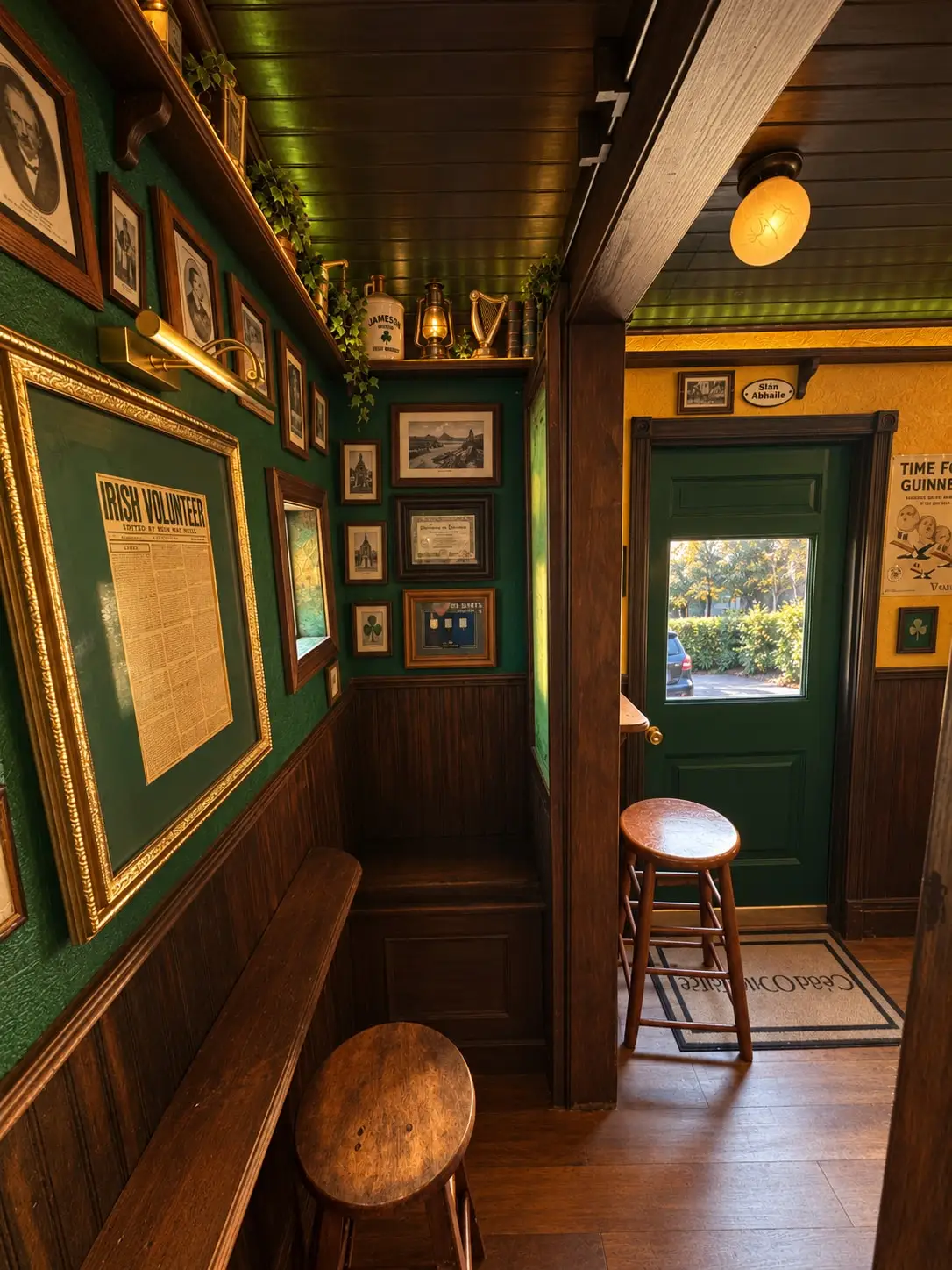
Because a síbín is the pub at its most essential: small, hidden away, and full of people who came for the company as much as the drink. The Síbín is a Victorian Irish pub built into a trailer, and it seats about sixteen — which is síbín-sized — around a working bar and a real snug. It turns up in a driveway, a field or a car park, and the next day it is gone, which is more or less how a shebeen was supposed to behave.
The walls carry genuine Irish history — Dáil Éireann bonds, a Daniel O’Connell signature and a 1916 Irish Volunteer newspaper — and the bartenders, if you want them, are from Ireland. Unlike the original, we are entirely above board: we never sell alcohol, you supply it, and we are based in Plymouth, MA with a phone number. For the rest of the síbín experience, get in touch.
Small, hidden away, and the craic flows freely.— for 24 hours, anywhere in New England
or call (508) 322-1298
A shebeen is an unlicensed drinking house — a place that sells drink without the licence the law requires. The word is the English spelling of the Irish síbín. In Ireland it historically meant a cottage kitchen or back room selling illicit poitín or home-brewed ale; the word later travelled to Scotland and, most famously, to the townships of South Africa.
“Shi-BEEN”, with the stress on the second syllable. The sí is a “shee” sound, as in sídhe, the fairy folk, and the accent (the fada) on each í makes the vowel long. If you say “shebeen” you are saying it correctly already — that spelling was invented so English speakers could.
No. A pub is licensed; a síbín, strictly, is not. The síbín is the older, rougher, more private cousin: a room in somebody’s house with a jug on the table, open to those who knew to knock. Modern Irish pubs are its respectable descendants, and the snug — the little private room inside a pub — keeps a bit of the síbín’s secrecy alive. We have written about the snug separately.
Only in spirit. The Síbín is a mobile Irish pub for rent, and we do not sell alcohol at all — you supply the drink, or add our bartenders from Ireland to pour it. The name is about the atmosphere: small, hidden away, full of talk, and the kind of place where the craic flows freely. We are a legitimate business based in Plymouth, MA; the only thing illicit about us is the amount of fun had in a parking space.
Not in Ireland, where it is used fondly, if a little mischievously, for any small, convivial drinking place and for the pubs that take the name. In South Africa the word carries a serious history: shebeens were where Black South Africans drank and organised when the law barred them from licensed bars, and many are now licensed taverns. Everywhere it is used, the word means the same thing underneath — a drink among people who know each other.
A towed Victorian Irish pub that seats sixteen, with a snug and real Irish history on the walls. Tell us the date and where you are.
Pub news, new dates and the odd giveaway. Subscribe now and you're in the draw to win a free 24-hour rental of The Síbín — our authentic mobile Irish pub — worth up to $1,200.
You're on the list. Go raibh maith agat.
You're in the draw too. We'll be in touch in the first week of November 2026.