The 1916 Irish Volunteer Newspaper Inside The Síbín
A weekly paper from the last months before the Rising, framed inside a pub you can rent.
The paper of a movement about to rise
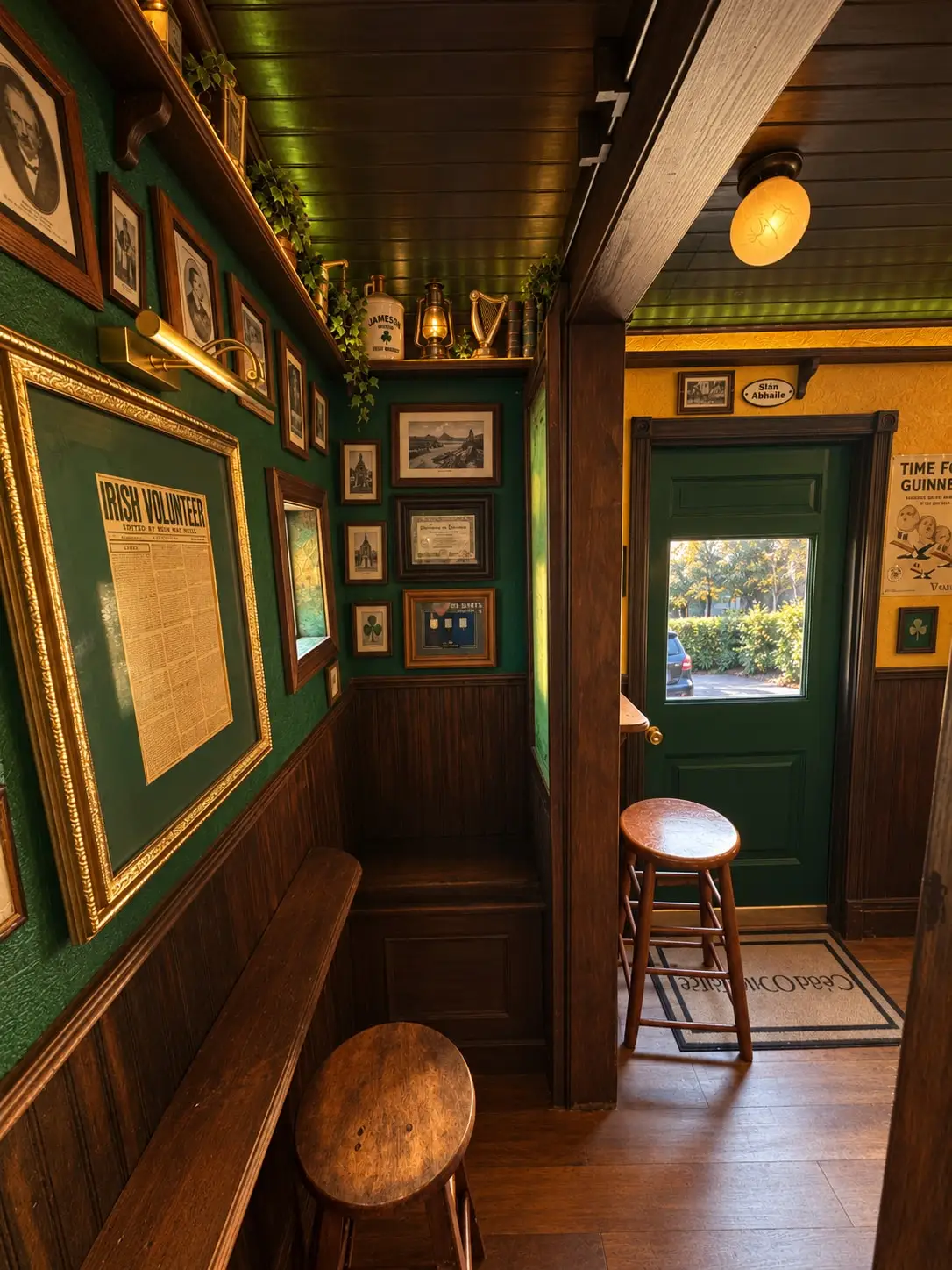
The 1916 Irish Volunteer newspaper inside The Síbín is an original issue of The Irish Volunteer, the weekly paper of the Irish Volunteers, the militia founded in 1913 whose members marched out at Easter 1916. The paper ran from 1914 until the Rising and then stopped, so any 1916 issue comes from its final months — printed drill notes and editorials in the weeks before the men reading them took the General Post Office.
It is framed inside the pub among the other Irish history artefacts: a Dáil Éireann bond and a signature of Daniel O’Connell. Here is what the paper was, and why a yellowed weekly deserves a frame.
 1916
The Irish Volunteers and their newspaper
The Irish Volunteers were founded at a packed meeting in Dublin in November 1913. Home Rule — a parliament for Ireland within the United Kingdom — had finally passed the House of Commons, and unionists in Ulster had raised an armed force to resist it. The Volunteers were the nationalist answer: a citizen militia, drilling openly, to make sure Home Rule was delivered. By the summer of 1914 they numbered well over a hundred thousand.
A weekly for the ranks
The Irish Volunteer began in early 1914 as the movement’s own weekly newspaper. It was a working paper as much as a political one: drill instruction, notes on musketry and field craft, orders and announcements from headquarters, reports from companies around the country, and articles by the leadership on what the force was for. For a man in a rural company it was often the only regular line to Dublin.
The split of 1914
When the First World War broke out in August 1914, John Redmond, leader of the Irish Parliamentary Party, urged the Volunteers to enlist in the British Army. The great majority followed him and became the National Volunteers. A minority — a few thousand, led by Eoin MacNeill and with the secret Irish Republican Brotherhood working inside it — refused, kept the name Irish Volunteers, and kept the paper. From then on The Irish Volunteer spoke for the smaller, more radical force.
Easter 1916
On Easter Monday, 24 April 1916, Irish Volunteers and the Irish Citizen Army seized the General Post Office and other buildings in Dublin and proclaimed an Irish Republic. The Rising was crushed within a week; much of the city centre was shelled and burned, and fifteen of the leaders, Pearse among them, were executed in May. Public opinion, hostile at first, turned. Within three years the party of the Rising had swept a general election and the First Dáil had met — the parliament that floated the bonds on the next wall.
The newspaper did not survive the Rising. Its final issue appeared in the days before Easter week, and after the surrender the authorities had no intention of letting it resume. A 1916 copy is therefore a paper from the last weeks of a movement that was about to change the country — written, in many cases, by men who knew what was coming and could not say so in print.
Rent the pub and 1916 comes with it.— along with two draft lines, a snug and a bartender from Dublin if you want one
or call (508) 322-1298
The other artefacts
The newspaper hangs with a Dáil Éireann bond from the loan that followed the Rising, and a signature of Daniel O’Connell, whose peaceful politics the men of 1916 had decided were not enough. All three are introduced on the artefacts page, and the pub itself — rates, capacity and what is included — is on The Síbín’s page. Questions? Ask us.
Questions about the newspaper
What was The Irish Volunteer newspaper?
The Irish Volunteer was the weekly newspaper of the Irish Volunteers, the nationalist militia founded in Dublin in November 1913. It began publication in early 1914 and carried drill instruction, orders, news from local companies and political articles by the movement’s leaders. It ceased with the Easter Rising in April 1916, so a 1916 issue is from the paper’s last few months.
Who were the Irish Volunteers?
A volunteer force raised in 1913, initially to defend Home Rule for Ireland, which had been promised by Westminster and was being resisted by unionists in Ulster. The movement split in late 1914 over whether Irishmen should fight for Britain in the First World War; the minority who refused kept the name Irish Volunteers and the newspaper. It was members of that force, with the Irish Citizen Army, who rose at Easter 1916 and who later became the Irish Republican Army of the War of Independence.
Is the newspaper in The Síbín an original?
Yes, it is an original 1916 issue, not a facsimile. We are documenting its provenance — the exact issue date, what the front page carries, its condition and how it was acquired — and will publish that here once it is confirmed. Until then we describe the paper in general and let the frame speak for itself.
Rent The Síbín for your event
Tell us the date and where you are. The bar, the snug and the history all arrive together.