The Daniel O’Connell Signature Inside The Síbín
The hand of The Liberator, on the wall of a pub you can rent.
The Liberator, in his own hand
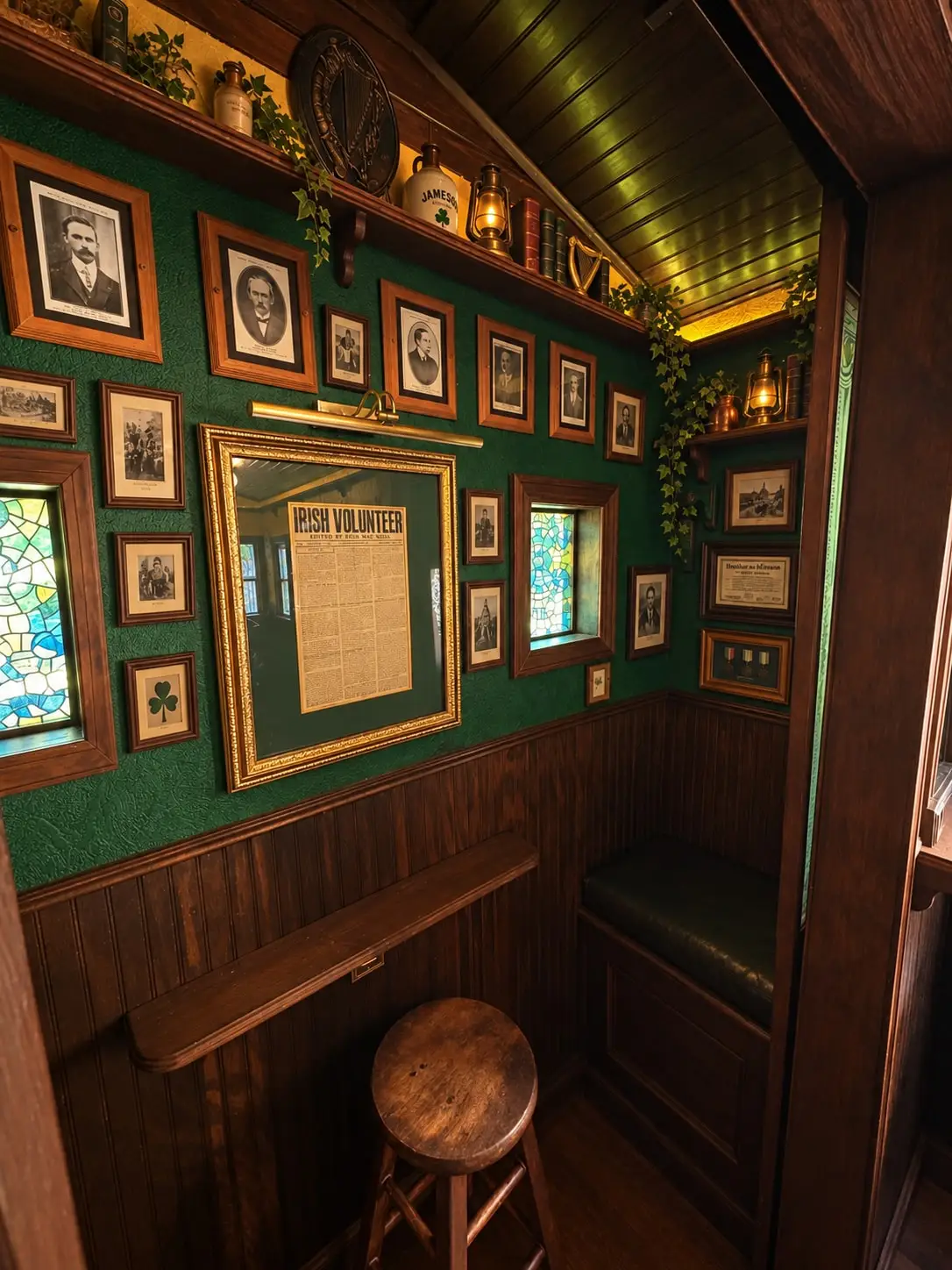
The Daniel O’Connell signature inside The Síbín is a genuine period document signed by the man Ireland still calls The Liberator — the Kerry barrister who won Catholic Emancipation in 1829, built one of the first mass political movements in Europe, and drew hundreds of thousands to his monster meetings for the repeal of the Union. It hangs on the pub’s wall among the other Irish history artefacts.
O’Connell signed a great deal in a long public life, and his letters and franks survive in numbers; this is one of them. Below is who he was, why he still matters to Irish America, and what we know — and do not yet know — about our document.
 1775–1847
Daniel O’Connell, 1775–1847
O’Connell was born into a Catholic gentry family in County Kerry in 1775, educated partly in France in the years of the Revolution, and called to the Irish bar in 1798 — one of the first generation of Catholics allowed to practise. He became the most famous advocate in Ireland, and then turned the same gifts on the law itself.
Catholic Emancipation, 1829
Catholics in Ireland could vote but could not sit in Parliament or hold most high offices. In the 1820s O’Connell built the Catholic Association into something new: a national movement of ordinary people, funded by a “Catholic rent” of a penny a month collected at chapel doors, and organised with the help of the clergy. In 1828 he stood for Parliament in County Clare and won, knowing he could not take the oath required to sit. Faced with the prospect of the whole of Catholic Ireland behind him, the government conceded. The Roman Catholic Relief Act of 1829 opened Parliament to Catholics, and O’Connell took his seat. That is why he is The Liberator.
Repeal and the monster meetings
His second great campaign was for repeal of the Act of Union of 1800, which had abolished Ireland’s own parliament. In the early 1840s the Repeal Association staged open-air gatherings on a scale nobody had seen — the “monster meetings” — at historic sites around the country, with crowds counted in the hundreds of thousands. The government banned the meeting planned for Clontarf in October 1843, O’Connell called it off rather than risk bloodshed, and was afterwards imprisoned for conspiracy, though the sentence was overturned on appeal. He insisted all his life on peaceful, constitutional means. Repeal did not come, and he died in Genoa in 1847, on his way to Rome, as the Famine devastated Ireland.
Why he matters to Irish America
O’Connell showed that a disenfranchised people could organise, pay their penny and win — a lesson emigrants carried with them into American politics. He was also an outspoken opponent of slavery, and did not spare Irish-Americans who tolerated it, which made him a complicated hero on this side of the Atlantic in his own time and a clearer one since. Frederick Douglass heard him speak in Dublin in 1845 and wrote admiringly of him.
What a signed O’Connell document is
O’Connell wrote constantly — to his family, his agents, his political allies and the press — across more than forty years. As a Member of Parliament he could also “frank” letters: sign the address panel so that the post went free. Those signed panels were cut out and kept by collectors even in his lifetime, and with his letters they make up most of the O’Connell autographs that survive today. An O’Connell signature is therefore not a great rarity, but it is the real thing: ink put on paper by the hand that led Ireland for forty years.
Rent the pub and The Liberator comes with it.— along with two draft lines, a snug and a bartender from Dublin if you want one
or call (508) 322-1298
The other artefacts
O’Connell’s signature hangs beside a Dáil Éireann bond from the loan that funded the independence he argued for by other means, and a 1916 Irish Volunteer newspaper from the spring of the Rising. All three are introduced on the artefacts page, and the pub itself — rates, capacity and what is included — is on The Síbín’s page. Questions? Ask us.
Questions about the signature
Who was Daniel O’Connell?
Daniel O’Connell (1775–1847) was the dominant Irish political figure of the first half of the nineteenth century, known as The Liberator. A Kerry-born barrister, he built the Catholic Association into the first mass political movement in Ireland and won Catholic Emancipation in 1829, which allowed Catholics to sit in Parliament. He then led the campaign to repeal the Act of Union, drawing enormous crowds to his “monster meetings” in the 1840s.
What is a Daniel O’Connell signature usually on?
Most surviving O’Connell signatures are on letters or on “franks” — the signed address panels that allowed a Member of Parliament to send post free of charge. He was a prolific correspondent across forty years in public life, so his hand is not rare, but every example is a direct link to the man. Signed legal documents and the occasional petition also turn up.
Is the signature in The Síbín genuine?
Yes, it is a period document in O’Connell’s hand, not a facsimile. We are documenting its provenance — what the document is, its date, what it says and how it was acquired — and will publish that here once it has been confirmed. We would rather be slow and right than quick and wrong about a thing like this.
Can I see the O’Connell signature?
Rent The Síbín for your event
Tell us the date and where you are. The bar, the snug and the history all arrive together.